Common pitfalls to avoid when selling IPv4 addresses
 Mireia Solà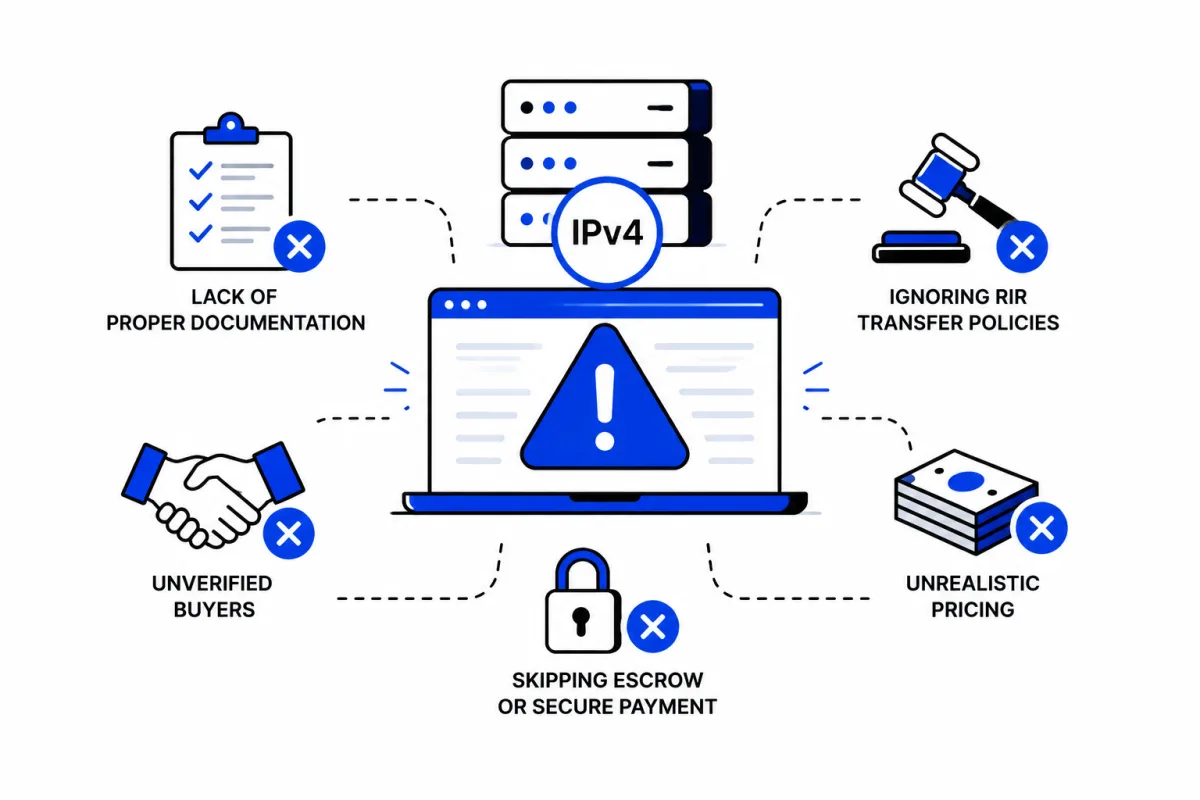
Selling unused IPv4 space can create capital, but the sale must be planned as a registry, legal, financial, and routing process. Sellers reduce risk when they verify ownership, prepare documents, check reputation, set realistic pricing, and align payment release with the completed transfer.
Selling IPv4 addresses is the process of transferring registered IPv4 number resources from the holder to a buyer under applicable RIR policy and sale terms. It helps address owners convert unused space into capital, but it requires due diligence, valuation, transfer planning, escrow control, and post-sale routing cleanup.
Table of Contents
- Why do IPv4 sale pitfalls appear before the buyer signs?
- How do pricing mistakes affect an IPv4 sale?
- What causes RIR transfer delays?
- Why does technical cleanup matter before selling?
- How can payment and escrow mistakes be avoided?
- When is leasing better than selling?
- What should sellers clarify before starting an IPv4 sale?
- How should an IPv4 seller move forward?
Why do IPv4 sale pitfalls appear before the buyer signs?
IPv4 sale pitfalls often start before negotiation. A seller may assume that unused space is ready for sale, while the registry record, company name, legacy status, or authority documents are not prepared. This can slow the deal or reduce buyer confidence.
Common early mistakes include:
- listing a block before confirming the registered holder;
- ignoring old company names, mergers, or missing authorization records;
- offering space that is still used by internal systems or customers;
- failing to check route objects, RPKI status, WHOIS data, and abuse contacts;
- starting price talks without knowing current demand for that block size.
A seller should prepare the asset before marketing it. Clean documentation gives buyers fewer reasons to delay or discount the offer.
How do pricing mistakes affect an IPv4 sale?
Pricing mistakes can damage the transaction in two ways. A price that is too high may keep the block on the market for months. A price that is too low may create unnecessary loss if the seller does not compare block size, region, routing quality, and buyer demand.
A practical price review should include:
- Prefix size and whether the block is a /24, /22, /20, or larger allocation.
- RIR region and transfer policy constraints.
- Reputation, blacklist history, and previous BGP use.
- Current buyer demand for similar address space.
- Expected broker, escrow, tax, and administrative costs.
If the seller needs a one-time exit, it can review a sell IPv4 addresses process before setting the asking range. If recurring income is preferable, leasing may be compared with a sale.
What causes RIR transfer delays?
RIR transfer delays happen when the registry process is not prepared before the commercial agreement. Regional Internet Registries may require specific forms, proof of authority, account status checks, recipient review, or confirmation that the resource is eligible for transfer.
Delays can appear when:
- the seller’s legal entity does not match registry records;
- signatory authority is unclear;
- the block is under restriction, dispute, or policy hold;
- buyer documents are incomplete;
- inter-RIR transfer rules are not compatible;
- payment milestones do not match registry approval steps.
The seller should map the transfer path before accepting final terms. This protects the timeline and reduces disputes.
Why does technical cleanup matter before selling?
A buyer does not only acquire numbers. The buyer inherits the operational condition of the prefix. Poor cleanup can reduce value or create extra questions during due diligence.
Before sale, sellers should review:
- active BGP announcements and origin ASN history;
- route objects, RPKI ROAs, and DNS dependencies;
- PTR records and geolocation data;
- blocklist, spam, proxy, and malware reputation;
- hidden use in firewalls, VPNs, monitoring tools, or partner allowlists.
Technical cleanup should happen before closing. It is easier to explain a prepared block than to defend problems found by the buyer.
How can payment and escrow mistakes be avoided?
Payment risk is a major part of IPv4 sales. A seller wants payment certainty, while a buyer wants proof that the transfer will complete. Escrow can help, but only if release conditions are written clearly.
The agreement should define the deposit, payment currency, escrow holder, release trigger, refund conditions, dispute period, and documents required for closing. Vague wording such as “payment after transfer” can create conflict if registry approval, routing cutover, and final handover happen at different times.
Sellers should also avoid direct payment changes requested outside the agreed process. Payment diversion and fake closing instructions are avoidable when all parties use a documented workflow.
When is leasing better than selling?
A sale removes future control over the address space. Leasing may be better when the seller may need the block later or wants recurring income instead of one capital event. The owner can compare sale value with a monetize unused IP path and decide whether cash flow or permanent exit fits the network plan.
The decision should consider budget needs, internal growth, tax treatment, asset value, and operational effort.
What should sellers clarify before starting an IPv4 sale?
How should an IPv4 seller move forward?
A seller should treat selling IPv4 addresses as a controlled transaction, not only as a listing. To avoid pricing mistakes, prepare registry documents, manage RIR transfer delays, compare sale and leasing options, and protect payment workflow, contact InterLIR Global and choose an IPv4 sale process that keeps the transaction structured from valuation to payout.