How broker support simplifies an IPv4 block sale
 Mireia Solà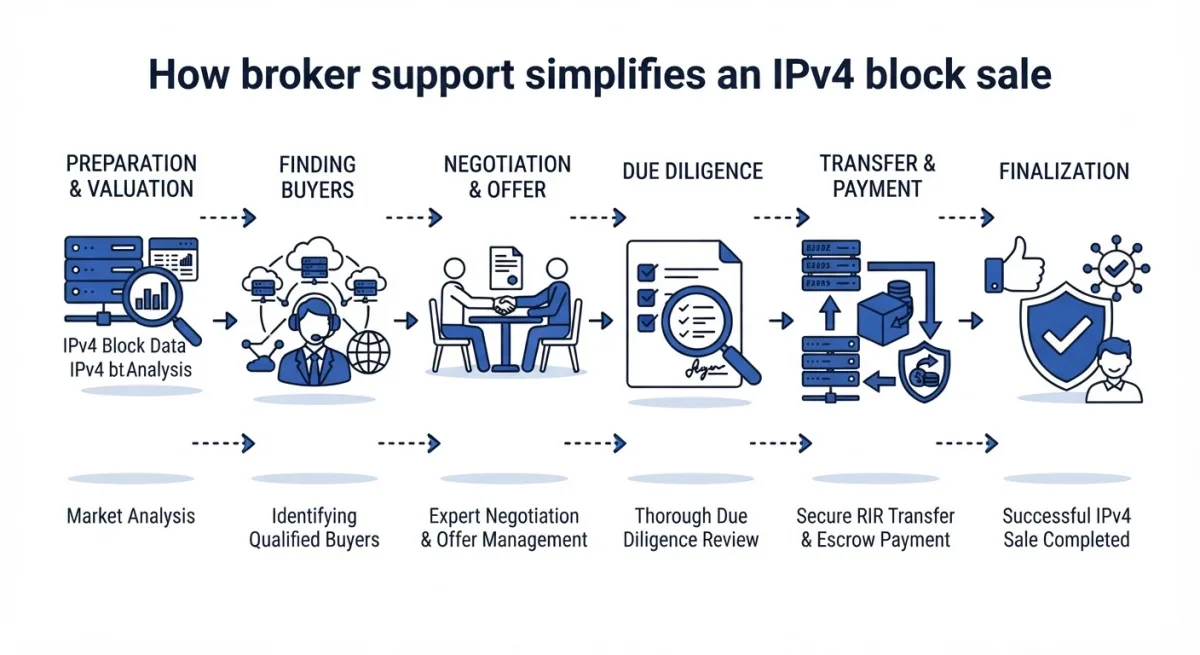
Selling an IPv4 block involves more than finding a buyer. The transaction may require ownership checks, technical due diligence, buyer screening, RIR documentation, negotiation, escrow coordination, and a controlled transfer. Broker support can simplify these steps by keeping commercial and registry work inside one structured workflow.
IPv4 broker sale support is a transaction-management process that helps an address owner prepare a block, screen buyers, organize documentation, coordinate RIR transfer steps, support negotiation, and align escrow with closing. It reduces process fragmentation and helps the seller move from preparation to completed transfer with clearer responsibilities.
Table of Contents
- What does a broker do before a block reaches the market?
- How does buyer screening reduce transaction risk?
- How can broker support simplify due diligence?
- Why does documentation matter during an IPv4 sale?
- How does RIR coordination fit into the workflow?
- What role does escrow play in the process?
- How does broker support improve negotiation?
- How should the overall sale workflow be organized?
- What additional questions should sellers ask?
- How can an address owner simplify an IPv4 block sale?
What does a broker do before a block reaches the market?
Before marketing begins, the broker can help organize the information buyers will expect to review. This includes the exact prefix, ownership records, RIR status, transfer eligibility, routing history, reputation, and technical issues that may affect the transaction.
A structured preparation stage reduces repeated questions later. It also helps the seller identify problems that should be resolved before pricing discussions or buyer outreach begin.
How does buyer screening reduce transaction risk?
Buyer screening helps distinguish serious counterparties from inquiries unlikely to complete a transaction. Not every buyer has the same financial readiness, RIR eligibility, or ability to complete the transfer.
Screening can include:
- buyer identity and legal entity;
- intended RIR or transfer path;
- financial readiness;
- expected closing timeline;
- documentation requirements;
- compatibility with the block.
This gives the seller a smaller group of qualified counterparties and reduces time spent on negotiations that cannot reach closing.
How can broker support simplify due diligence?
Due diligence usually involves commercial and technical questions. Buyers may request proof of ownership, registry status, routing history, blacklist information, abuse history, and confirmation that the prefix is transferable.
A broker can help organize these materials into a consistent review package and coordinate questions between the parties. This keeps the process structured and reduces the risk that key documents or checks are handled too late.
Why does documentation matter during an IPv4 sale?
Documentation creates the evidence needed for buyer review, RIR coordination, escrow, and closing. Missing or inconsistent records can delay the process even when both parties agree on price.
The transaction file may include:
- proof of ownership and signing authority;
- registry and organizational records;
- transfer forms;
- routing and reputation notes;
- escrow instructions;
- closing confirmations.
Keeping these documents aligned helps prevent different teams from working with conflicting information.
How does RIR coordination fit into the workflow?
RIR coordination is central to the transfer because commercial agreement alone does not move the resource. The seller and buyer may need to submit documents, verify organizational details, satisfy recipient requirements, and respond to registry questions.
Broker support can help track these steps and align the transaction timeline with the registry process. Sell IPv4 addresses planning is easier when RIR requirements are understood before payment and closing milestones are fixed.
What role does escrow play in the process?
Escrow separates payment readiness from payment release. The buyer can fund the transaction while the seller retains protection against completing the transfer without receiving payment.
The workflow should define when funds are deposited, which event triggers release, what happens if the transfer is delayed, and which documents confirm completion. Broker coordination helps keep escrow instructions consistent with the sale agreement and RIR milestones.
How does broker support improve negotiation?
Negotiation covers more than price per address. The parties may also need to agree on timing, escrow structure, transfer costs, closing conditions, technical handover, and responsibility for delays.
A broker can keep these issues inside one negotiation process and separate commercial preferences from conditions required by the registry or transaction structure.
How should the overall sale workflow be organized?
A clear workflow gives each stage a defined purpose and completion point. Preparation should come before buyer outreach, screening before detailed negotiation, and documentation before final transfer and payment release.
A practical process may move through:
- block preparation and valuation;
- buyer screening;
- negotiation and term agreement;
- due diligence and documentation;
- RIR submission;
- escrow and closing;
- technical handover.
The value of the workflow is reducing the chance that one missing step disrupts the transaction late in the process.
What additional questions should sellers ask?
How can an address owner simplify an IPv4 block sale?
An owner can reduce complexity by organizing buyer screening, due diligence, documentation, RIR coordination, escrow, negotiation, and technical handover as one process. If an organization wants support structuring an IPv4 sale from preparation through transfer, it can contact InterLIR Global to coordinate the workflow around the block, buyer, and registry requirements.