How clean registry records improve IPv4 sale readiness
 Katarzyna Ostrowska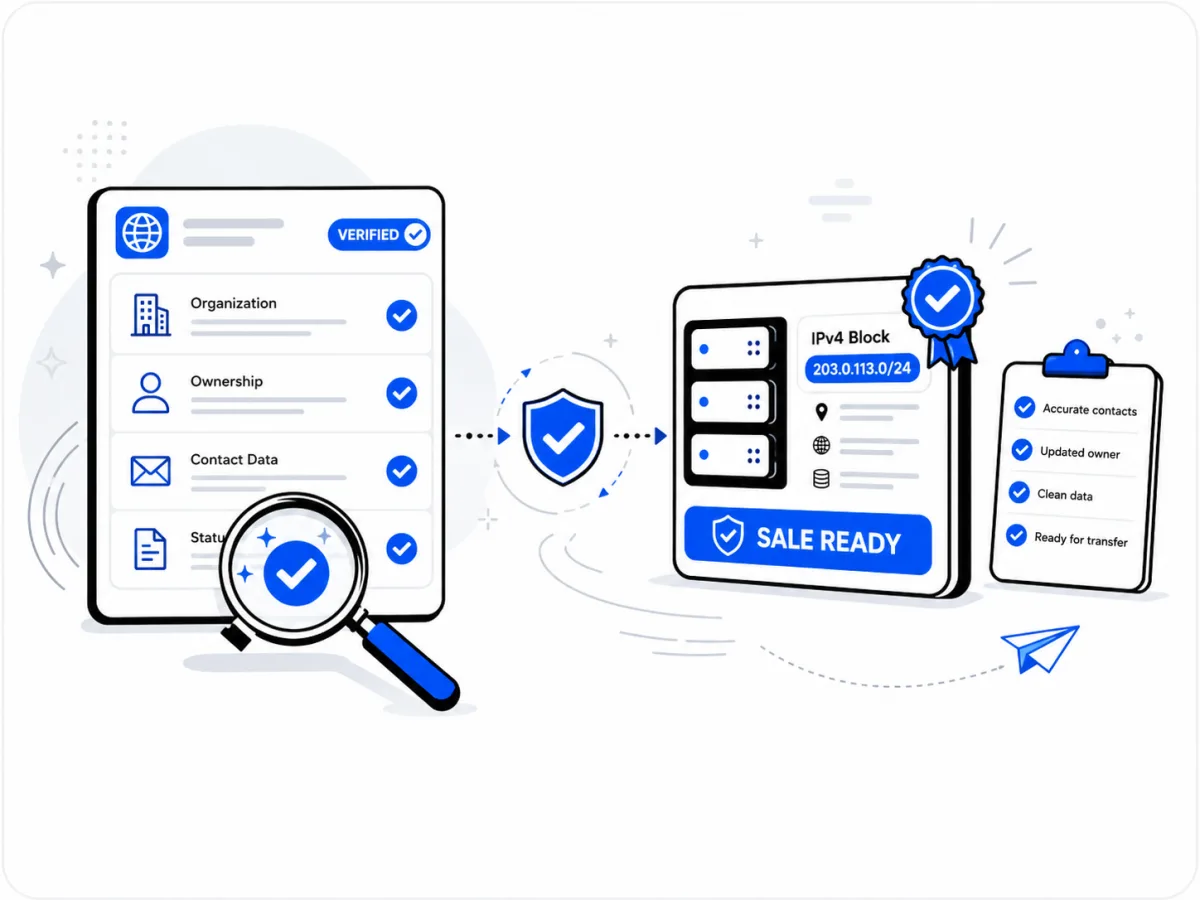
An IPv4 sale can slow down before price negotiation if registry data is outdated. Buyers, brokers, and registries need to confirm who controls the resource, which organization can sign, and whether the block can move through the correct transfer path.
Clean registry records are accurate, current, and consistent ownership, contact, and resource entries in the relevant RIR database. They improve IPv4 sale readiness by helping sellers prove authority, reduce buyer questions, support due diligence, and prepare smoother RIR transfers before money, escrow, and routing handover are scheduled.
Table of Contents
- Why do clean registry records matter before selling IPv4?
- How does WHOIS accuracy affect buyer confidence?
- What do RIR transfers require from the seller side?
- How do registry records affect routing and reputation checks?
- When should records be updated before a sale?
- What should sellers clarify before preparing a transfer?
- How should an IPv4 owner move forward?
Why do clean registry records matter before selling IPv4?
Clean registry records show that the address holder can explain the resource history and start a sale process without basic identity problems. Buyers do not only check the prefix. They check the legal holder, account status, contacts, organization names, and transfer eligibility.
Outdated records can raise concerns about control. A company may have changed its name, merged with another entity, changed officers, or moved address administration to a different team. If those changes are not reflected in registry data, the seller may need extra documents before the buyer feels comfortable moving forward.
Clean records help sellers:
- prove that the listed holder matches the selling entity;
- reduce delays during due diligence and escrow setup;
- avoid confusion over legacy, allocated, or assigned resources;
- prepare route, abuse, and contact updates before closing.
How does WHOIS accuracy affect buyer confidence?
WHOIS accuracy matters because it is often the first public record a buyer reviews. It should not contain old company names, abandoned email addresses, inaccurate abuse contacts, or unclear resource descriptions. Inconsistent WHOIS data can make the block look unprepared even when the seller has legitimate rights.
A seller should check:
- Registered organization name and legal address.
- Administrative, technical, and abuse contacts.
- Resource status, assignment type, and sponsoring relationship.
- Route objects, maintainer records, and related AS information.
- Whether historical changes can be explained with documents.
WHOIS cleanup should happen before the block is marketed. Fixing records after a buyer asks questions can weaken negotiation and extend the timeline.
What do RIR transfers require from the seller side?
RIR transfers depend on the policies of the registry that holds the resource and, for inter-regional transfers, the receiving registry as well. The seller must be able to show authority, resource eligibility, and correct account status. Some resources may also be subject to transfer restrictions or additional review.
Before a seller starts discussions, the internal team should confirm:
- who can legally sign transfer documents;
- whether the block is transferable under current policy;
- whether invoices, membership, or account obligations are current;
- whether the recipient will need pre-approval or demonstrated need;
- whether any dispute, restriction, or pending update affects the block.
A seller preparing to sell IPv4 addresses should align registry preparation with commercial terms before accepting final pricing.
How do registry records affect routing and reputation checks?
Registry data is not the same as routing, but buyers often review both together. If WHOIS contacts are outdated and route objects are inconsistent, the buyer may suspect broader operational neglect. That can trigger more checks on reputation, BGP history, RPKI, geolocation, and abuse handling.
Sale readiness improves when the seller can provide a clear handover file with:
- prefix list and exact block boundaries;
- current holder and authority documents;
- known route objects and RPKI status;
- abuse contact and escalation information;
- notes on geolocation, blacklist history, and prior use.
This file helps the buyer plan routing after transfer and reduces uncertainty during closing.
When should records be updated before a sale?
Registry records should be reviewed before the resource is offered to the market. Last-minute cleanup can delay escrow, registry submission, and buyer approval. It can also reveal internal issues that should have been solved earlier, such as missing corporate documents or unclear signatory rights.
A practical preparation order is simple:
- confirm internal ownership and approval to sell;
- update registry contacts and organization data;
- collect legal documents that explain name changes or mergers;
- review routing records and remove obsolete dependencies;
- prepare a transfer checklist for the buyer and registry.
If the owner is not ready to sell yet, it may compare a sale with a monetize unused IP path and keep the resource active while records are cleaned.
What should sellers clarify before preparing a transfer?
How should an IPv4 owner move forward?
An IPv4 owner should prepare registry data before treating a block as sale-ready. To improve IPv4 sale readiness, verify WHOIS accuracy, organize authority documents, review RIR transfer conditions, and prepare a clean handover file, contact InterLIR Global and choose a sale process that protects the value and timing of your IPv4 resource.