How escrow protects buyers in IPv4 transactions
 Bram de Vries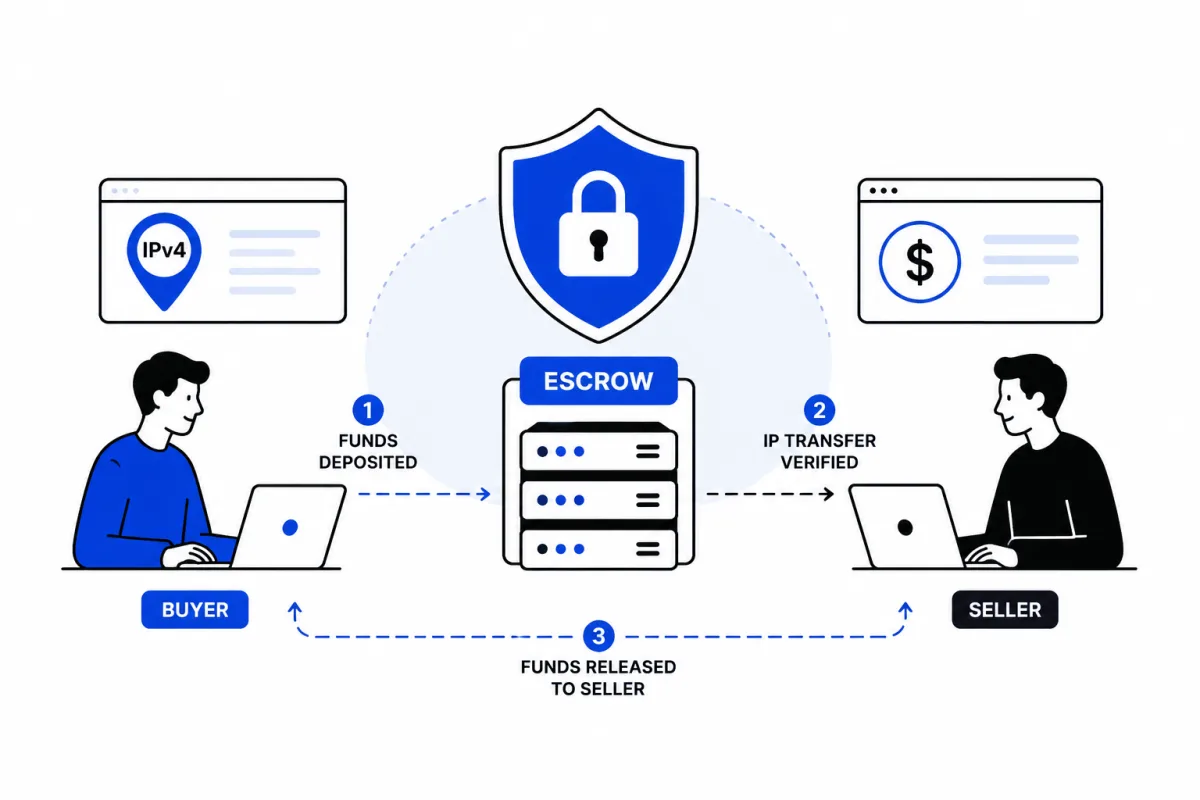
Buying IPv4 space involves money, registry approval, legal documents, and technical handover. A buyer may pay before the transfer is confirmed if the transaction is not structured correctly. Escrow reduces that risk by holding funds until agreed transfer conditions are met.
Escrow in IPv4 is a controlled payment arrangement where buyer funds are held by a neutral party during an IPv4 address transaction. It supports buyer protection by linking payment release to seller verification, registry transfer progress, resource status, and documented completion of the IPv4 handover process.
Table of Contents
- Why is escrow important in IPv4 transactions?
- How does escrow support buyer protection?
- What role do secure fund transfers play?
- How does escrow help with fraud prevention?
- What should buyers verify before funds are released?
- When can escrow fail to protect the buyer?
- What should buyers ask before using escrow?
- How should a buyer move forward?
Why is escrow important in IPv4 transactions?
IPv4 transactions are different from simple software purchases. The buyer is not only paying for a number range. The buyer needs the registered resource to move correctly, the seller to have authority, and the prefix to be usable after approval.
Escrow helps reduce risk because payment is not released only on trust. The transaction can define conditions that must happen before funds move to the seller. These conditions may include registry acceptance, signed transfer documents, proof of seller authority, and confirmation that the buyer can receive the block.
Escrow is especially useful when:
- the buyer and seller are in different jurisdictions;
- the transfer involves a Regional Internet Registry process;
- payment must be aligned with registry milestones.
How does escrow support buyer protection?
Buyer protection depends on clear evidence. Escrow creates a structure where the buyer can verify each stage before money leaves the protected account. This does not replace due diligence, but it makes payment safer.
A buyer should define:
- who holds the funds and under which escrow terms;
- what documents prove seller authority;
- what registry event triggers release;
- what happens if the transfer is rejected or delayed;
- how disputes, refunds, and cancellation deadlines are handled.
This protects the buyer from paying for a block that cannot be transferred, is under dispute, or is not controlled by the claimed seller.
What role do secure fund transfers play?
Secure fund transfers are important because IPv4 deals can involve large payments, multiple entities, and cross-border banking. Escrow helps separate payment readiness from payment release. The buyer can show funds are available, while the seller does not receive them until the agreed conditions are satisfied.
The payment plan should match the registry process. Some transactions use one release after final approval. Others use staged releases for document signing, registry acceptance, and operational completion. The buyer should avoid vague language such as “release after transfer” without defining what transfer completion means.
If the company is planning to buy IPv4 addresses, escrow terms should be reviewed together with registry rules, transfer agreement, and deployment schedule.
How does escrow help with fraud prevention?
Fraud prevention in IPv4 transactions starts with identity, authority, and resource control. A fraudulent seller may claim control over a block, offer a resource under restriction, or push the buyer to pay before registry confirmation. Escrow reduces the impact of these tactics by delaying payment release.
Before funding escrow, the buyer should check:
- registered holder identity and signing authority;
- whether the prefix is transferable under the relevant registry policy;
- whether the seller’s entity matches contracts and registry records;
- whether the block is free from known disputes or restrictions;
- whether escrow instructions match the commercial agreement.
These checks help prevent impersonation, payment diversion, and purchase of resources that cannot move legally.
What should buyers verify before funds are released?
Escrow protects payment, but it does not prove technical quality by itself. The buyer should verify the resource before accepting release. A prefix can transfer correctly and still create operational problems if routing history, reputation, or geolocation is poor.
Before release, buyers should review:
- WHOIS and registry updates after approval;
- BGP origin history and expected route plan;
- RPKI, IRR, route objects, and upstream requirements;
- blacklist, spam, proxy, and abuse history;
- DNS, PTR, geolocation, and customer allowlist dependencies.
The release condition should reference evidence, not assumptions. Registry confirmations, signed notices, and routing records can support the handover file.
When can escrow fail to protect the buyer?
Escrow can fail when instructions are vague or when the buyer treats escrow as a substitute for verification. It will not fix a weak contract, missing authority documents, or poor technical review.
Common mistakes include releasing funds before registry confirmation, ignoring post-transfer restrictions, failing to define dispute deadlines, and accepting a block without reputation review.
What should buyers ask before using escrow?
How should a buyer move forward?
A buyer should use escrow as part of a wider control process for IPv4 transactions, not as the only safeguard. To structure escrow in IPv4, align fund release with registry milestones, verify resource quality, and reduce payment risk before acquisition, contact InterLIR Global and choose an IPv4 purchase process that keeps buyer protection documented from offer to handover.