How to organize IPv4 inventory before offering blocks to tenants
 Johanna Reiter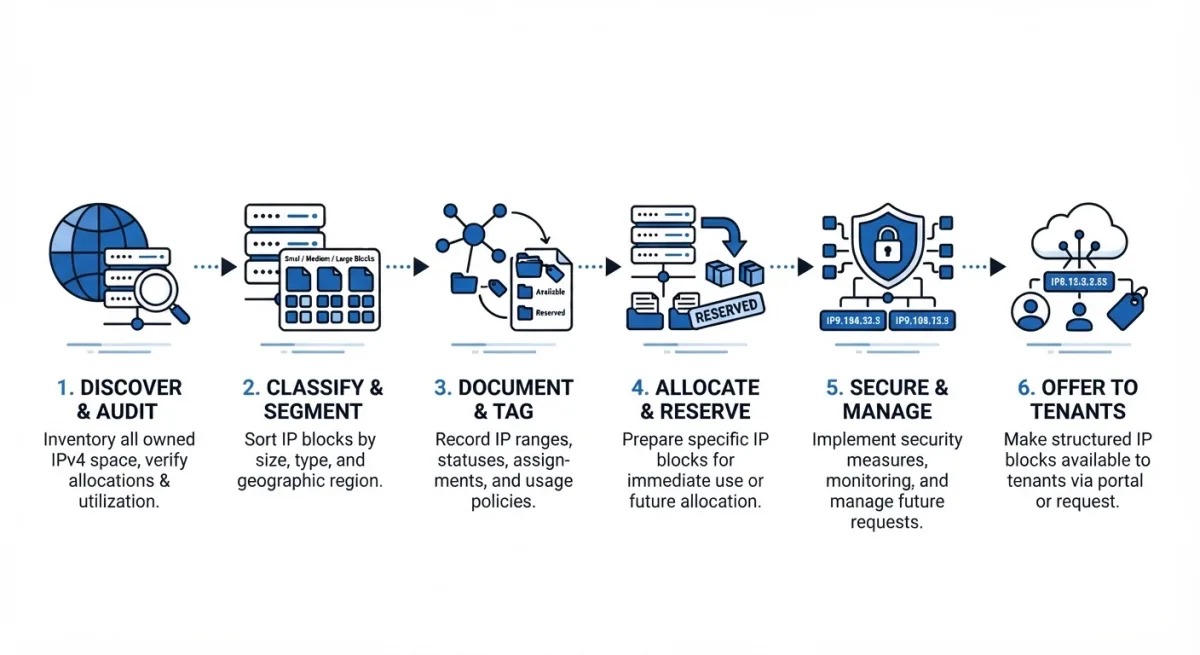
Before leasing IPv4 space, an address owner needs a clear inventory of what is available, what is still tied to production, and which records require cleanup. A block that appears idle internally may still have routing, DNS, registry, or reputation dependencies that make it unsuitable for tenant use.
IPv4 inventory tenant readiness is the process of preparing address space before leasing by verifying ownership records, prefix boundaries, routing status, RIR data, abuse history, reputation, and geolocation. The goal is to identify which blocks are ready for tenants and which need remediation before they are offered.
Table of Contents
- What should be included in an IPv4 inventory?
- How should ownership records be checked before leasing?
- Why should prefix boundaries be reviewed carefully?
- What routing status should be documented?
- How should abuse history and reputation be reviewed?
- Why does geolocation belong in the inventory?
- How should readiness be classified before offering a block?
- What should be completed before tenant handover?
- What additional questions should address owners ask?
- How should an owner prepare IPv4 inventory for leasing?
What should be included in an IPv4 inventory?
An inventory should show more than the total number of addresses owned. Each block needs a clear status so the owner can distinguish active infrastructure, reserved capacity, idle space, and ranges already committed elsewhere.
A practical inventory should include:
- exact prefix and subnet size;
- current operational use;
- internal owner or responsible team;
- registry holder and RIR;
- routing status and origin ASN;
- availability date for leasing.
This creates a common source of truth for network, legal, and commercial teams before tenant discussions begin.
How should ownership records be checked before leasing?
Ownership records should match the legal entity that controls the resource and can authorize its use. Outdated company names, old contacts, mergers, or unclear signatory authority can delay leasing even when the address space is unused.
The owner should review RIR records, organizational details, administrative contacts, and any documents needed to prove control. If the resource is managed through a sponsoring organization or another registry relationship, that structure should also be clear before the block is offered.
Why should prefix boundaries be reviewed carefully?
A prefix should be separated cleanly from production use before leasing. Fragmented allocations can create problems if part of the range still supports servers, customer systems, firewalls, or external integrations.
The inventory should show whether the block can be offered as one contiguous prefix or whether internal workloads must be moved first. Routing, tenant assignment, and later return are easier when the resource boundary is clear.
What routing status should be documented?
Routing status shows how the block currently appears on the internet and whether old announcements or route objects remain. A tenant may need a different origin ASN or routing model, so existing records should be reviewed before activation.
The owner should document current BGP visibility, IRR route objects, RPKI status, and any upstream dependencies. Leasing IPv4 addresses is easier to structure when the technical state of the prefix is already known.
How should abuse history and reputation be reviewed?
Abuse history can affect the value and usability of an otherwise valid block. Previous spam, malware, proxy activity, or unresolved complaints may continue to influence external reputation systems after a new tenant starts using the range.
The preparation process should distinguish historical issues from active problems. Owners should check major blacklist and reputation sources, review unresolved abuse cases, and determine whether remediation is needed before the block is marketed.
Why does geolocation belong in the inventory?
Geolocation affects how external services classify the address range. A tenant may expect a prefix to appear in a particular country or region, while databases may still associate it with an older network or location.
The inventory should record current geolocation across relevant providers and note known inconsistencies. This allows the owner to disclose the current state before the tenant builds region-sensitive services around the range.
How should readiness be classified before offering a block?
Not every idle prefix should be marked as tenant-ready. A useful inventory can assign a readiness state based on the remaining work required before deployment.
For example, a block may be classified as ready, ready after routing updates, under reputation remediation, reserved for internal use, or unavailable because dependencies remain. This helps commercial teams avoid offering resources that cannot be activated on time.
What should be completed before tenant handover?
Preparation should be finished before the tenant depends on the block for production. The owner should confirm that internal services no longer use the range, registry data is accurate, routing changes are understood, and abuse contacts are active.
A clean handover also makes later return easier because the initial condition of the block has been documented. This gives both sides a reference point for routing, reputation, and operational responsibility.
What additional questions should address owners ask?
How should an owner prepare IPv4 inventory for leasing?
An owner should organize IPv4 inventory around ownership records, prefix boundaries, routing status, RIR data, abuse history, reputation, geolocation, and tenant readiness. If an organization needs to prepare unused blocks for leasing and reduce activation risk, it can contact InterLIR Global to structure the inventory and handover process around the technical condition of its address portfolio.