How to prepare your IPv4 block for sale
 Henrik Sandberg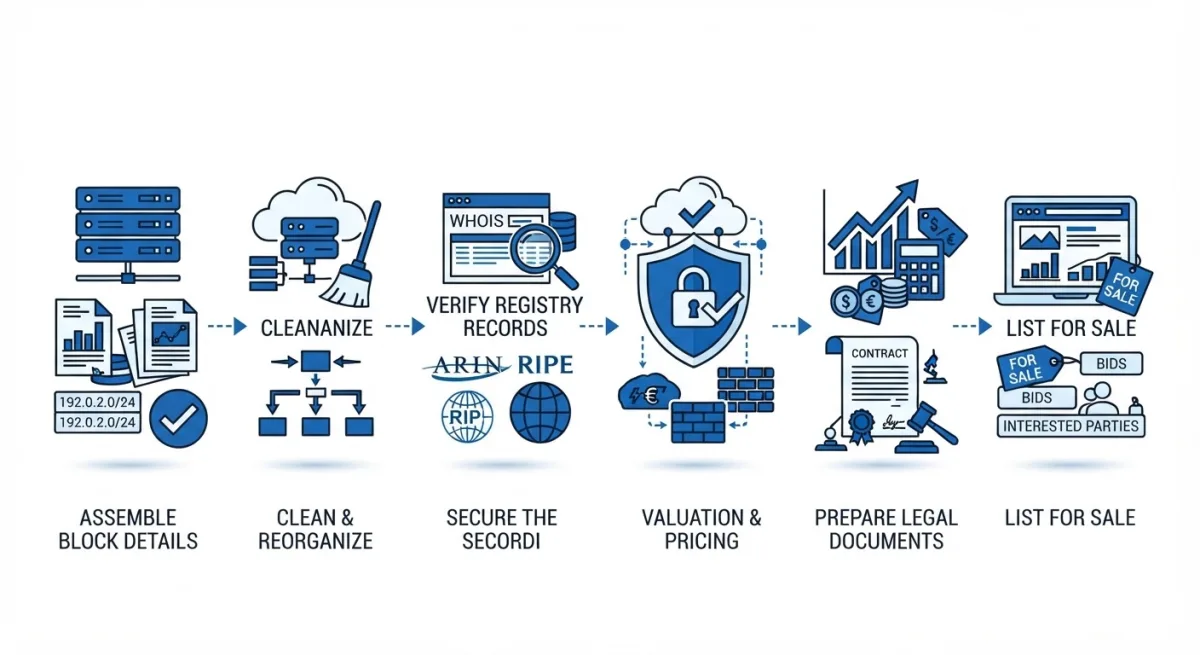
Preparing an IPv4 block for sale requires more than confirming that the addresses are unused. Buyers and registries will review ownership, transfer eligibility, routing records, reputation, geolocation, and abuse history. A prepared block is easier to evaluate and less likely to create delays during due diligence.
IPv4 block sale preparation is the process of making an address resource technically, administratively, and commercially ready for transfer. A readiness checklist should cover ownership records, RIR status, routing cleanup, IRR, RPKI, blacklist exposure, geolocation review, abuse history, and the transfer path before the block is offered.
Table of Contents
- What should a readiness checklist include?
- How should ownership records be prepared?
- What should be checked with the RIR before listing the block?
- Why does routing cleanup matter before a sale?
- How should IRR and RPKI records be prepared?
- How should blacklist and abuse history be reviewed?
- Why should geolocation review happen before transfer?
- How should the transfer process be prepared?
- What additional questions should sellers ask?
- How should an owner prepare an IPv4 block for sale?
What should a readiness checklist include?
The checklist should confirm that the resource is both available and transferable. Internal teams should verify that no production systems, customers, or network policies still depend on the range.
A practical readiness checklist should include:
- exact prefix boundaries and block size;
- current ownership records;
- RIR status and transfer eligibility;
- routing and BGP state;
- IRR and RPKI records;
- blacklist and reputation checks;
- geolocation and abuse history.
This creates a single preparation record for legal, network, and transaction teams.
How should ownership records be prepared?
Ownership records should clearly show which legal entity controls the resource and who can approve the sale. Outdated company names, mergers, dissolved entities, or old contacts can slow the transaction even when the block is technically clean.
The seller should compare corporate documents with RIR records and confirm current signing authority. If the block is managed through a sponsoring organization, that relationship should also be documented before due diligence begins.
What should be checked with the RIR before listing the block?
RIR preparation should confirm that the resource can move through the intended transfer process. The seller should understand any restrictions, account requirements, documentation rules, or inter-RIR conditions that may affect timing.
The registered holder, resource status, organization details, technical contacts, and abuse contacts should be current. Any mismatch should be resolved before commercial milestones are agreed.
Why does routing cleanup matter before a sale?
Routing cleanup reduces uncertainty for the buyer. Old BGP announcements, stale route objects, or hidden upstream dependencies can make a valid block look operationally unprepared.
The seller should identify current and historical origin ASNs, confirm which announcements must be withdrawn, and document the expected state at handover. If the prefix is still in use, cleanup should be coordinated with migration.
How should IRR and RPKI records be prepared?
IRR and RPKI should reflect the actual routing state of the block before transfer. Obsolete route objects, maintainers, or ROAs can create confusion and may need to be removed or updated during handover.
The seller should document existing IRR records, current ROAs, authorized origin ASNs, and the process for changing them after transfer. Registry ownership changes do not automatically update routing authorization.
How should blacklist and abuse history be reviewed?
Blacklist and abuse history affect buyer confidence because past activity can continue to influence reputation systems. A block associated with spam, malware, proxy abuse, or unresolved complaints may require remediation before sale.
The seller should review:
- current blacklist listings;
- historical spam or malware signals;
- unresolved abuse cases;
- proxy or VPN classifications;
- remediation already completed.
The goal is to provide a documented view of the block’s current condition.
Why should geolocation review happen before transfer?
Geolocation can remain tied to an older network, provider, or country even after operational use changes. This can affect buyers that need the range for regional services, fraud controls, VPN infrastructure, or customer-facing platforms.
A geolocation review should compare major databases and record inconsistencies. If corrections are needed, the seller can begin them before transfer or disclose the current state to the buyer.
How should the transfer process be prepared?
Transfer preparation should connect legal ownership, RIR requirements, payment milestones, and technical handover. The seller should know which documents are required, who will sign them, and what evidence confirms successful transfer.
Sell IPv4 addresses planning should also define what happens to routing, registry contacts, RPKI, IRR, and other operational records after approval.
What additional questions should sellers ask?
How should an owner prepare an IPv4 block for sale?
A seller should complete IPv4 block sale preparation before final negotiations: verify ownership records, confirm RIR readiness, clean routing, review IRR and RPKI, check blacklist and abuse history, and document geolocation. If an organization needs to prepare a block for transfer and buyer review, it can contact InterLIR Global to structure the sale around the technical and registry condition of the resource.