How to turn unused IPv4 addresses into recurring revenue
 Henrik Sandberg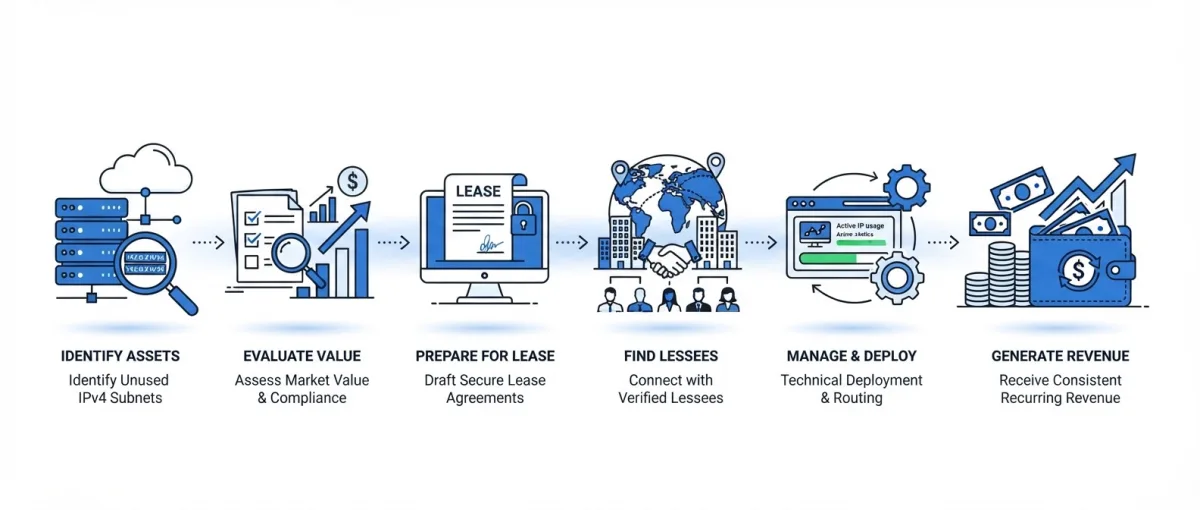
Organizations may hold IPv4 ranges that are valid, routable, and no longer required for current operations. Instead of leaving that capacity idle, the owner can use a structured leasing model to generate recurring income while retaining control of the resource and the option to use it again later.
Unused IPv4 recurring revenue is a monetization model in which idle address space is leased to another organization for a defined period while ownership remains with the holder. It can create regular income from an existing asset, but the result depends on lease structure, tenant quality, utilization, operational costs, and long-term planning.
Table of Contents
- When is unused IPv4 suitable for monetization?
- How does the leasing model create recurring income?
- What affects the yield from IPv4 leasing?
- How should tenant risk be managed?
- How should planning influence the lease duration?
- How should recurring IPv4 income be forecast?
- When should an owner lease instead of sell?
- What additional questions should address owners ask?
- How should an owner structure IPv4 monetization?
When is unused IPv4 suitable for monetization?
Not every unused range should be offered for lease. The owner should first confirm that the addresses are genuinely idle and not required for internal growth, disaster recovery, or future projects.
The initial review should cover:
- current utilization across the block;
- hidden dependencies in DNS, firewalls, VPNs, and allowlists;
- registry and routing records;
- reputation and blacklist history;
- expected internal demand over the lease period.
This prevents the company from monetizing capacity that later becomes necessary for its own infrastructure.
How does the leasing model create recurring income?
A leasing model converts unused IPv4 capacity into periodic payments instead of a one-time sale. The owner keeps the asset while the tenant receives the right to use and, where permitted, announce the range for the agreement period.
Income depends on block size and quality, lease term, tenant profile, market demand, and operating conditions. Longer agreements may provide more predictable cash flow, while shorter leases preserve flexibility but can create more vacancy and administrative work.
Monetizing unused IPv4 addresses should therefore be treated as an asset-management process rather than simply placing an idle block with the first available tenant.
What affects the yield from IPv4 leasing?
Yield should be measured after costs and risk, not only by the headline lease rate. Two blocks with the same size can produce different results if one requires more remediation, tenant screening, routing work, or support.
The owner should account for:
- monthly or annual lease income;
- broker or platform fees;
- registry and routing administration;
- abuse handling and reputation monitoring;
- vacancy between tenants;
- remediation after the lease ends.
A higher nominal rate does not always produce a better return if the tenant increases operational risk or reduces the future value of the range.
How should tenant risk be managed?
Tenant quality directly affects the long-term value of the asset. Spam, malware, uncontrolled proxy traffic, or repeated abuse complaints can damage reputation across the range and make future leasing more difficult.
The owner should define acceptable use, escalation procedures, response deadlines, and termination rights before activation. Monitoring routing and reputation during the lease also helps address problems before they affect a larger part of the portfolio.
How should planning influence the lease duration?
Planning should connect the lease term with the owner’s future infrastructure needs. If the company may need the range again within a year, a multi-year commitment can reduce flexibility even if the rate appears attractive.
The owner should compare expected internal demand with contract duration and notice period. Renewal options, early termination rules, and the time required to return the block to internal use should also be considered before signing.
How should recurring IPv4 income be forecast?
Forecasting should distinguish signed revenue from potential future income. A block leased today may later become vacant, move to another tenant, or require remediation before it can generate income again.
A practical forecast should separate confirmed lease payments, expected renewal, vacancy assumptions, operating costs, and risk reserves. This gives finance teams a more realistic view of net income and avoids treating every available address as permanently monetized.
When should an owner lease instead of sell?
Leasing is usually more relevant when the organization wants recurring income but still sees strategic value in ownership. Selling may be more appropriate when the block is unlikely to be needed again and the company prefers immediate capital.
The decision should consider future demand, expected yield, market value, tax treatment, operational effort, and reputation risk. The objective is to choose the model that best matches the role of IPv4 in the wider asset plan.
What additional questions should address owners ask?
How should an owner structure IPv4 monetization?
An owner should connect monetization with inventory review, tenant controls, lease duration, yield analysis, planning, and realistic forecasting. If an organization wants to turn idle IPv4 into recurring income while retaining ownership and managing operational risk, it can contact InterLIR Global to structure a leasing model around the value and future role of its address portfolio.