RIPE, ARIN, APNIC, and LACNIC: what buyers should know before a transfer
 Johanna Reiter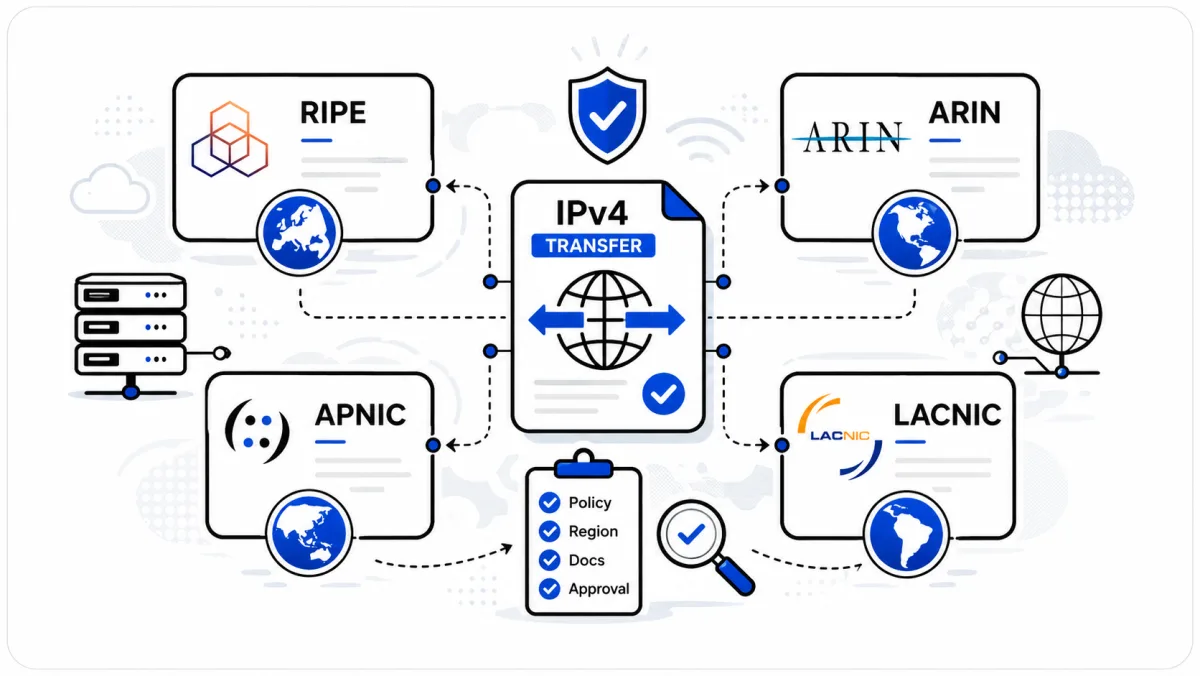
A buyer should not treat an IPv4 purchase as a simple payment and handover. The transfer must match the rules of the relevant Regional Internet Registry, the seller’s legal status, the receiving organization’s eligibility, and the routing plan that will be used after registration changes.
An IPv4 transfer is the formal movement of registered IPv4 number resources from one holder to another under applicable registry rules. It helps buyers obtain address space through the market, but it also requires policy review, documentation, due diligence, and coordination with the correct Regional Internet Registry before the block can be used safely.
Table of Contents
- Why do Regional Internet Registry policies matter before an IPv4 transfer?
- What should buyers know about RIPE transfers?
- What makes ARIN transfer planning different?
- What should buyers check in APNIC and LACNIC regions?
- How should buyers perform due diligence before payment?
- What should happen after transfer approval?
- What should buyers clarify before an IPv4 transfer?
- How should a buyer move forward?
Why do Regional Internet Registry policies matter before an IPv4 transfer?
Regional Internet Registry policies define who may transfer resources, who may receive them, what documentation is required, and which restrictions apply after the transaction. A buyer must check the policy environment before signing commercial terms.
The payment agreement does not replace the registry process. A buyer may have funds, a seller may have a block, and the transfer may still be delayed if the receiving account, legal documents, or eligibility conditions are not ready.
Buyers should review:
- source and recipient legal entities;
- current registry holder of the block;
- minimum transfer size and recipient requirements;
- inter-RIR transfer availability;
- post-transfer restrictions, if any;
- WHOIS, abuse contacts, route objects, and RPKI data.
What should buyers know about RIPE transfers?
RIPE transfers are relevant when the resource is registered in the RIPE NCC service region or when an inter-RIR process involves RIPE NCC. Buyers should check whether the seller is a valid holder, whether the resource is transferable, and whether any restriction applies.
RIPE-focused due diligence should include:
- Confirming the registered holder and sponsoring LIR relationship, if applicable.
- Checking whether the resource is subject to a temporary transfer restriction.
- Reviewing registration data quality before the request.
- Preparing the receiving organization and required documents.
- Planning route objects, RPKI, and operational changes after approval.
Registration and reachability are related, but they are not the same process. The buyer should plan routing separately from the registry update.
What makes ARIN transfer planning different?
ARIN policy is important when the buyer is in the ARIN region or when resources move into or out of ARIN. Buyers should expect recipient review and documentation requirements. The organization may need to show how the addresses will be used within the policy window.
ARIN planning should cover the intended use case, existing address holdings, projected utilization, and account readiness. The buyer should also check whether the block size matches the need. A larger block may require stronger justification, while a smaller block may not cover the deployment plan.
If the buyer needs ownership for production growth, it can review a buy IPv4 addresses option and prepare documentation before the transfer process begins.
What should buyers check in APNIC and LACNIC regions?
APNIC and LACNIC transfers require attention to regional membership, account status, fees, eligibility rules, and inter-regional compatibility. Buyers should not assume that a process used in one RIR will work the same way in another.
For APNIC or LACNIC-related transfers, buyers should check:
- whether the recipient must be a member or use a national internet registry;
- whether pre-approval or recipient evaluation is needed;
- whether the block is eligible for transfer;
- whether fees or renewal impact will apply;
- whether inter-RIR transfer rules align on both sides.
This matters when the buyer wants addresses for a multi-region network. A block may be legally transferable but still create operational work after the registry update.
How should buyers perform due diligence before payment?
Due diligence should happen before funds are released. The buyer should verify the block, the seller, the registry path, and the technical condition of the address range. This reduces the risk of paying for a resource that cannot move on time or cannot be used cleanly after transfer.
A practical review includes:
- confirming registry holder identity and authority to sell;
- checking whether the prefix is under dispute or restriction;
- reviewing blacklist, spam, proxy, and abuse history;
- checking BGP origin history and route stability;
- confirming geolocation expectations and update requirements;
- aligning escrow, payment milestones, and registry approval steps.
If the buyer needs ownership rather than temporary access, the purchase path should start only after legal, registry, routing, and reputation checks are complete.
What should happen after transfer approval?
After approval, the buyer still needs an operational cutover. The team should update routing policy, route objects, RPKI ROAs where applicable, WHOIS contacts, DNS records, firewall rules, and partner allowlists. A clean registry update can still cause downtime if the network cutover is not planned.
What should buyers clarify before an IPv4 transfer?
How should a buyer move forward?
A buyer should approach an IPv4 transfer as a policy, legal, and technical project, not only as an address purchase. To compare RIPE, ARIN, APNIC, and LACNIC requirements, prepare documentation, verify resource quality, and align transfer timing with deployment plans, contact InterLIR Global and choose an IPv4 acquisition path that matches your registry and network requirements.