Should you lease out a /24, /22, or larger IPv4 block?
 Johanna Reiter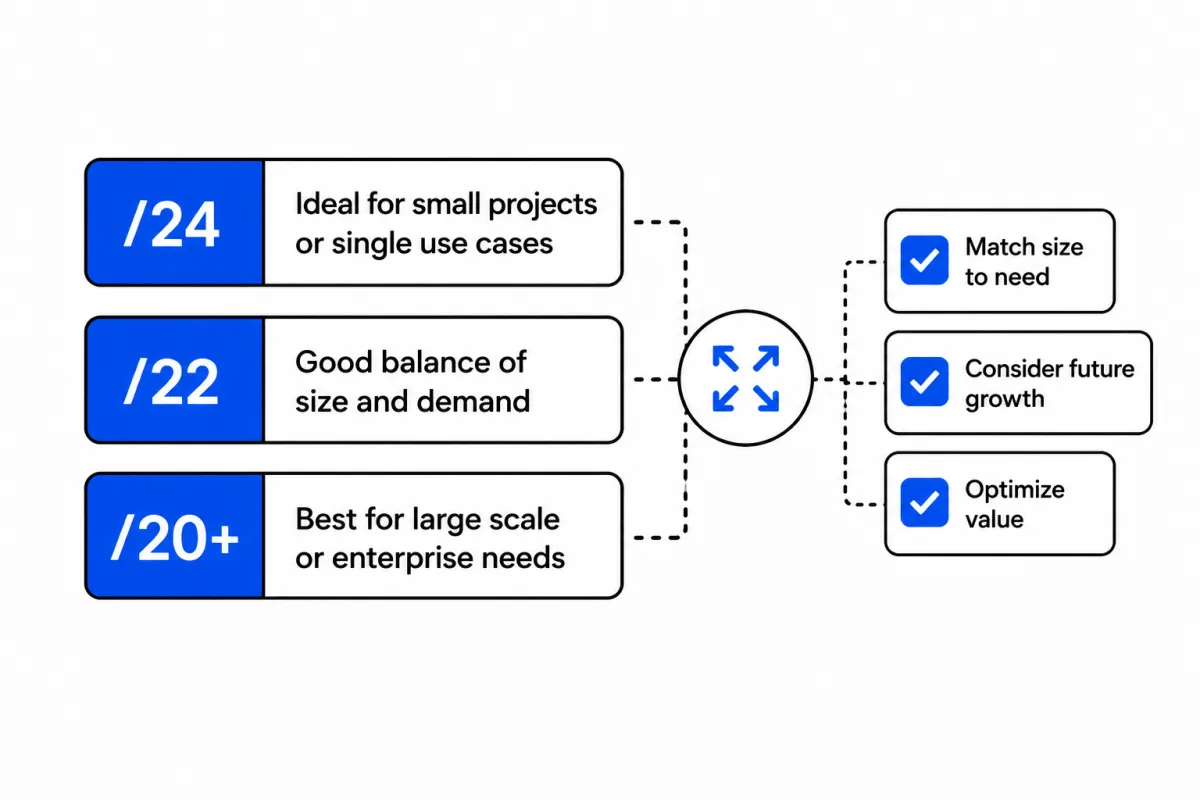
Unused IPv4 space can become an operating asset when the owner can verify rights, keep routing clean, and control abuse exposure. The block size matters because a /24, a /22, and a larger allocation attract different tenants, revenue models, and operational responsibilities.
To lease out IPv4 block means to let another network use a registered IPv4 prefix for a defined period while ownership stays with the holder. It helps address owners monetize unused space, serve market demand, keep registry control, and avoid a permanent sale when the resource may be needed later.
Table of Contents
- When is a /24 subnet enough for leasing?
- When does a /22 subnet create more value?
- When should IP address owners lease larger blocks?
- What does market demand change in block-size decisions?
- How can owners reduce risk before leasing?
- What should owners clarify before leasing an IPv4 block?
- How should an IPv4 owner move forward?
When is a /24 subnet enough for leasing?
A /24 subnet contains 256 IPv4 addresses. It is often the smallest practical unit for public BGP announcement because many networks filter longer IPv4 prefixes. This makes /24 useful for tenants that need a separate routable block but do not need a large pool.
A /24 may fit:
- SaaS platforms that need dedicated outbound ranges;
- small hosting clusters or edge locations;
- VPN, monitoring, or testing environments;
- temporary projects with limited traffic volume.
For owners, /24 leasing can reduce vacancy risk. Smaller blocks may attract more tenants, but they also create more contracts, more reputation checks, and more operational touchpoints.
When does a /22 subnet create more value?
A /22 subnet contains 1,024 IPv4 addresses. It can serve tenants that need larger pools for hosting, ISP growth, proxy infrastructure, regional platforms, or multi-service environments. A /22 may be more attractive when the tenant wants one routed range instead of several separate /24s.
A /22 can support:
- several customer segments under one routing policy;
- more stable geolocation and reverse DNS planning;
- fewer fragmented announcements;
- longer lease terms for infrastructure projects;
- easier allocation of internal sub-pools.
The owner should check whether leasing a /22 as one block brings better income than splitting it into four /24s. The right choice depends on tenant quality, expected duration, reputation risk, and demand in the relevant RIR region.
When should IP address owners lease larger blocks?
IP address owners may consider larger leases when they hold unused /21, /20, /19, or broader space and want fewer counterparties. Larger blocks can suit carriers, cloud platforms, large hosting providers, VPN networks, or data infrastructure operators.
Large-block leasing can reduce administrative work, but it increases concentration risk. If one tenant damages reputation across a broad range, cleanup can affect a major part of the owner’s portfolio. Owners should require stronger onboarding, clearer use-case documentation, and more detailed abuse procedures.
If the owner prefers a one-time exit instead of recurring leases, it can compare leasing with a sell IPv4 block option.
What does market demand change in block-size decisions?
Market demand changes by region, reputation, routing history, geolocation, and use case. Clean blocks with stable registry data are easier to lease. Blocks with blacklist history, unclear route objects, or weak abuse contacts may need remediation before they attract reliable tenants.
Before choosing the lease size, owners should review:
- Current utilization and future internal need.
- Prefix reputation in spam, proxy, and security databases.
- Existing route objects, RPKI status, and WHOIS accuracy.
- Tenant types that are acceptable for the owner’s risk policy.
- Whether splitting the block will create unnecessary routing complexity.
A block should not be leased only because it is idle. It should be leased in a way that protects long-term asset value.
How can owners reduce risk before leasing?
Owners should prepare governance before the first tenant receives an LOA. The lease should define who may announce the prefix, what use cases are allowed, how abuse reports are handled, and how the range returns at the end of the term.
Risk controls should include:
- written authorization and clear origin ASN rules;
- tenant screening and use-case review;
- abuse mailbox ownership and response deadlines;
- reputation monitoring during the lease;
- termination clauses for misuse or non-payment.
Owners that want recurring revenue without selling can review how to monetize IPv4 addresses while keeping ownership and operational boundaries documented.
What should owners clarify before leasing an IPv4 block?
How should an IPv4 owner move forward?
An owner should choose block size by tenant demand, routing quality, reputation exposure, and future internal need. To structure leasing terms, prepare documentation, assess whether a /24, /22, or larger range fits the market, and keep ownership protected, contact InterLIR Global and build an IPv4 leasing plan around the value of your address portfolio.