What buyers should verify before purchasing an IPv4 block
 Henrik Sandberg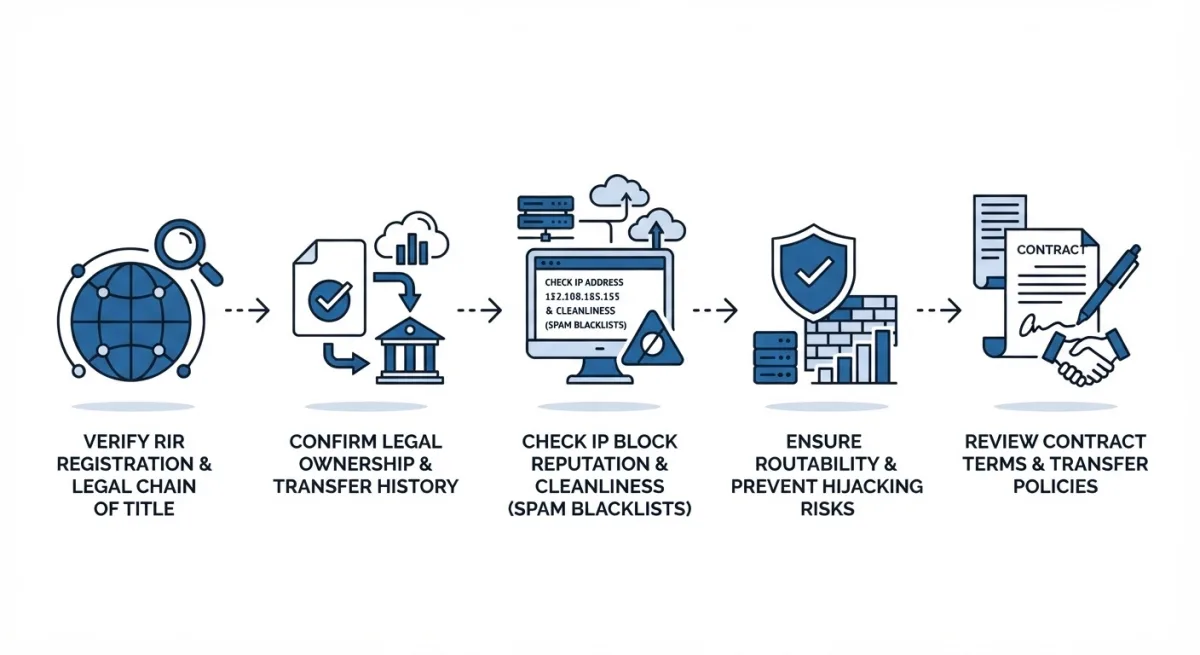
Buying IPv4 space is not only a commercial transaction. A buyer must confirm that the seller controls the resource, the block can be transferred under the relevant registry rules, and its technical history will not create routing, reputation, or geolocation problems after acquisition.
An IPv4 block purchase checklist is a structured due diligence process that verifies ownership, RIR status, transfer eligibility, routing history, blacklist exposure, reputation, geolocation, RPKI, and IRR records before payment and transfer. It helps buyers identify legal, registry, and network risks before the prefix becomes part of production infrastructure.
Table of Contents
- How should ownership verification be performed?
- What should buyers check about RIR status and transfer eligibility?
- Why should routing history be reviewed before purchase?
- How should blacklist and reputation checks be handled?
- What should buyers verify about RPKI and IRR records?
- Why does geolocation need to be checked before closing?
- How should buyers connect technical checks with payment?
- What additional questions should buyers ask?
- How should a buyer approach an IPv4 acquisition?
How should ownership verification be performed?
Ownership verification should start with the Regional Internet Registry record and the legal identity of the seller. The company offering the block must have authority to transfer it, and its corporate documents should match the organization that controls the resource.
The buyer should compare registry records with the sale agreement and confirm who is authorized to sign. Mergers, company name changes, legacy allocations, or outdated contacts can delay a transaction even when the seller has a legitimate claim to the addresses.
What should buyers check about RIR status and transfer eligibility?
RIR status determines whether the resource can move through the intended transfer path. Rules differ between RIPE NCC, ARIN, APNIC, LACNIC, and AFRINIC, so a buyer should not assume that a process used in one region applies in another.
Due diligence should confirm:
- the current registered holder;
- resource status and prefix size;
- applicable transfer restrictions;
- recipient eligibility requirements;
- inter-RIR compatibility where relevant;
- account or membership requirements.
Transfer eligibility should be confirmed before commercial milestones are fixed. A signed agreement does not guarantee that the registry will approve the transfer.
Why should routing history be reviewed before purchase?
Routing history shows how the prefix has been used on the public internet. Frequent origin changes, route leaks, unexpected announcements, or long periods of suspicious use may indicate additional operational risk.
The buyer should review previous origin ASNs, BGP visibility, route stability, and whether the planned network can announce the block cleanly after transfer. Historical routing problems do not always make a prefix unusable, but they can increase the time required for activation and troubleshooting.
How should blacklist and reputation checks be handled?
A blacklist check should cover more than one database because different services evaluate addresses in different ways. A prefix may be clean in one source but still carry spam, malware, proxy, or abuse signals elsewhere.
The review should include:
- major spam and mail blocklists;
- malware and threat intelligence databases;
- proxy and VPN classification sources;
- known abuse history;
- reputation systems relevant to the planned workload.
Reputation matters because a technically valid block can still create access problems for email, APIs, payment platforms, SaaS applications, or customer-facing services. Buying IPv4 addresses should therefore include both registry and reputation due diligence rather than focusing only on price per address.
What should buyers verify about RPKI and IRR records?
RPKI and IRR records help networks understand whether a route announcement is expected. Before acquisition, the buyer should identify existing ROAs, route objects, maintainers, and origin information associated with the prefix.
The transfer plan should also define what happens after registry approval. Old route objects may need to be removed or updated, and new RPKI authorization must match the intended origin ASN. Incorrect records can lead to route filtering even after ownership has changed successfully.
Why does geolocation need to be checked before closing?
Geolocation can affect fraud controls, regional content, payment checks, licensing rules, and customer expectations. A block registered in one region may still appear in databases as belonging to a previous country, network, or provider.
The buyer should compare several major geolocation sources and determine how difficult corrections may be. If the block will support regional services, VPN infrastructure, advertising, or location-sensitive applications, inaccurate geolocation can become an operational issue immediately after deployment.
How should buyers connect technical checks with payment?
Technical due diligence should be completed before final payment is released. Escrow or staged payment can reduce financial risk, but payment controls do not replace verification of the block itself.
A practical closing process should connect seller authority, RIR approval, resource status, and technical handover. The buyer should know which evidence confirms completion and whether routing, RPKI, IRR, and contact updates are part of the closing package or a separate post-transfer task.
What additional questions should buyers ask?
How should a buyer approach an IPv4 acquisition?
A buyer should treat IPv4 acquisition as a registry, technical, and commercial project rather than a simple asset purchase. Ownership verification, RIR status, transfer eligibility, routing history, reputation, geolocation, RPKI, and IRR records should all be reviewed before funds are released. If a company needs to assess a prefix and structure an acquisition process, it can contact InterLIR Global to align the transaction with registry requirements and the planned network deployment.