What documents are usually needed for an IPv4 purchase?
 Cian Doherty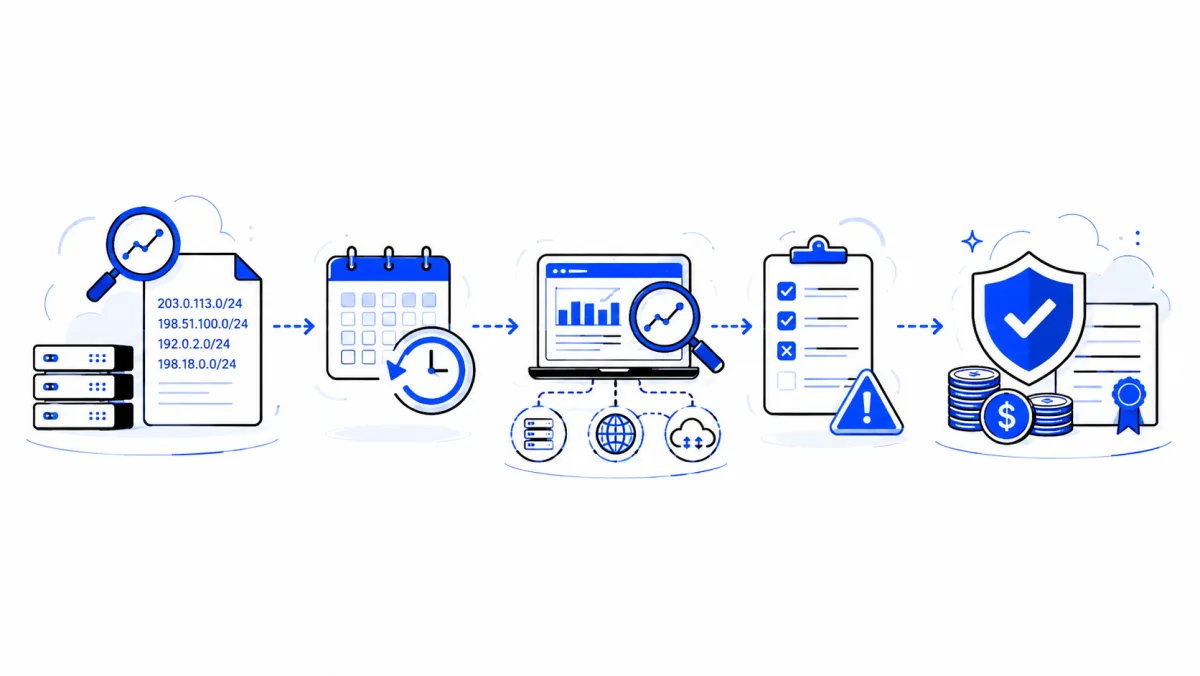
Buying IPv4 addresses requires preparation of technical, legal, and administrative documents. The exact requirements depend on the regional internet registry and transaction structure. Proper documentation helps verify ownership, confirm transfer eligibility, and complete the registry process without unnecessary delays.
IPv4 acquisition document checklist — a structured list of documents and records required to complete an IPv4 purchase. It usually includes ownership information, transfer documents, registry confirmations, corporate authorization, and compliance records. Preparing these materials helps organizations complete address transfers through the appropriate RIR.
Table of Contents
- Why are documents required for IPv4 acquisition?
- Which ownership documents are usually required?
- What transfer documents are needed during an IPv4 purchase?
- How does corporate authorization affect IPv4 purchases?
- Why do registries review source verification and compliance records?
- What payment and recipient documents may be required?
- How does recipient qualification influence IPv4 approval?
- What documents are usually needed for an IPv4 purchase?
- How can companies prepare IPv4 purchase documentation?
Why are documents required for IPv4 acquisition?
IPv4 transfers involve changes in resource ownership. Regional internet registries need evidence that the transaction is legitimate and that both parties meet applicable requirements.
Documentation helps confirm:
- legal ownership of IPv4 resources;
- authorization of the transaction;
- identity of involved organizations;
- compliance with registry policies;
- eligibility of the recipient.
Companies should prepare documents before starting the purchase process because missing information can delay registry approval.
Organizations evaluating available IPv4 resources can review IPv4 purchase services to understand acquisition procedures and requirements.
Which ownership documents are usually required?
Ownership verification is a central part of IPv4 acquisition. Registries and involved parties need to confirm that the seller has the right to transfer the address block.
Common ownership-related materials include:
- allocation or registration information;
- organization details from the registry;
- previous transfer records;
- source verification records;
- documents confirming control of the address resources.
The required information can vary depending on the registry and the history of the IPv4 block.
What transfer documents are needed during an IPv4 purchase?
Transfer documents provide formal confirmation that the parties agree to change ownership. These documents describe the transaction and support communication with the registry.
A typical document package may include:
- purchase or transfer agreement;
- organization authorization documents;
- registry application forms;
- identification details of involved entities;
- additional compliance information.
The exact format depends on the applicable RIR policies.
How does corporate authorization affect IPv4 purchases?
Registries often require confirmation that representatives have permission to complete the transaction. Corporate authorization shows that the organization approves the acquisition and that the responsible contacts can submit documents.
Authorization may include:
- signed internal approvals;
- confirmation from company representatives;
- authorized contact information;
- corporate registration details.
Proper authorization reduces the risk of delays caused by unclear responsibility.
Why do registries review source verification and compliance records?
The registry reviews documentation to maintain accurate records and prevent unauthorized transfers. Verification procedures help confirm the history of an IPv4 block and the legitimacy of the transaction.
Compliance checks may include:
- review of address allocation history;
- confirmation of ownership chain;
- verification of organization details;
- assessment of recipient eligibility.
A complete chain of ownership records helps demonstrate that the resource can be transferred correctly.
What payment and recipient documents may be required?
Some transactions require additional financial and organizational evidence. Payment evidence can confirm that the commercial agreement between parties has been completed.
Additional information may include:
- proof of transaction completion;
- company registration details;
- information about the beneficial owner;
- recipient organization data;
- qualification details required by the registry.
The level of review depends on the region, registry rules, and transaction complexity.
How does recipient qualification influence IPv4 approval?
A buyer must often demonstrate that it can receive and manage IPv4 resources. Recipient qualification confirms that the organization meets registry requirements.
The review may consider:
- organization legitimacy;
- network usage plans;
- operational responsibility;
- compliance with registry policies.
Providing accurate information helps avoid additional questions during the approval process.
What documents are usually needed for an IPv4 purchase?
How can companies prepare IPv4 purchase documentation?
Organizations planning IPv4 acquisition can review available infrastructure options with InterLIR Global. The company helps businesses evaluate documentation requirements, coordinate acquisition processes, and manage IPv4 resource transfers according to operational needs.