What happens when an IPv4 lease period ends?
 Henrik Sandberg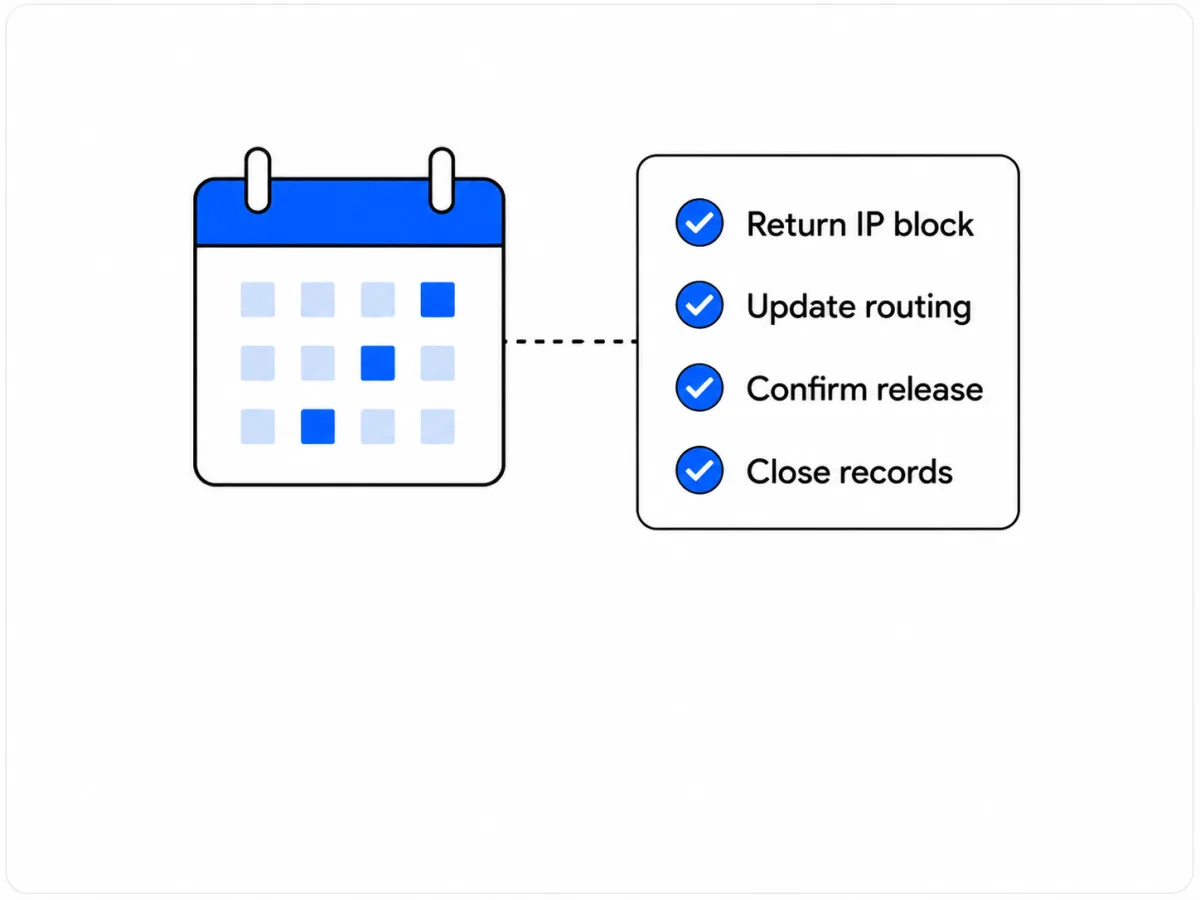
An IPv4 lease does not end only on paper. It affects routing, DNS, customer access, allowlists, monitoring, and service continuity. Teams should plan the final weeks of the lease before the last invoice cycle starts.
IPv4 lease period ends describes the point when a temporary right to use a public IPv4 prefix expires under the lease contract. This stage requires either renewal, planned replacement, or address return so the tenant can remove routes, update services, protect users, and avoid disputes with the address holder.
Table of Contents
- When should contract renewals be decided?
- How does IP address return work?
- What network migrations are needed before termination?
- Which risks appear if the lease is not closed correctly?
- When should a company renew, replace, or buy IPv4?
- What should teams confirm before the lease closes?
- How should a company move forward?
When should contract renewals be decided?
Contract renewals should be reviewed before the termination window begins. The tenant needs time to check whether the block is still required, whether the price still fits the budget, and whether the prefix has become part of critical production paths.
A renewal review should include:
- current use of the prefix across servers, VPNs, NAT pools, firewalls, DNS, and partner allowlists;
- remaining business need for the same address range;
- reputation history during the lease;
- notice period, payment schedule, and renewal term;
- risk of downtime if the block is replaced.
If the lease still supports active services, the team can extend the arrangement or lease IPv4 addresses under a revised plan that reflects current routing and capacity needs.
How does IP address return work?
The IP address return process should be controlled and documented. The tenant must stop using the range, remove it from infrastructure, and confirm that no traffic still depends on it. The owner or platform may then withdraw authorization, update route objects, or prepare the block for another tenant.
A practical return checklist includes:
- Identify every service, customer, firewall rule, DNS record, and API allowlist using the range.
- Move traffic to replacement addresses or alternative architecture.
- Lower DNS TTLs before the cutover and confirm propagation.
- Remove BGP announcements and stop origin ASN use at the agreed time.
- Archive evidence that the block was returned and no longer carries tenant traffic.
This process reduces stale routes, broken connections, and disputes about responsibility after the lease ends.
What network migrations are needed before termination?
Network migrations should start before the final lease date. A rushed migration can affect customer portals, mail delivery, monitoring, VPN access, payment systems, and partner integrations.
The migration plan should cover:
- new source addresses for outbound services;
- updated PTR records and mail authentication alignment;
- customer notifications for allowlist changes;
- traffic testing through the replacement range;
- fallback steps if external systems still point to the old IPs.
Teams should also check rate limits, fraud systems, and geolocation databases. Some services treat a new source range differently, even when the application is unchanged.
Which risks appear if the lease is not closed correctly?
A poorly closed lease can create technical and legal friction. The tenant may keep announcing a prefix after permission ends. The owner may receive abuse reports for traffic that should have moved. Customers may still connect to old addresses because DNS, cache, or allowlists were not updated.
Common risks include:
- route conflicts or unauthorized announcements;
- traffic blackholing after prefix withdrawal;
- mail delivery failures after PTR or SPF changes;
- support tickets from customers using old allowlists;
- reputation issues if abandoned services keep generating traffic.
Clear ownership, timestamps, and communication reduce these risks.
When should a company renew, replace, or buy IPv4?
Renewal is useful when the same range is stable, trusted, and still needed. Replacement works when the workload is temporary or the company wants to change architecture. Buying may be suitable when the business needs long-term control and cannot accept future lease uncertainty.
If permanent continuity becomes more important than flexibility, a company can review buy IPv4 addresses and compare transfer time, registry control, routing setup, and historical reputation before making a decision.
What should teams confirm before the lease closes?
How should a company move forward?
When an IPv4 lease period ends, the safest outcome is a documented decision: renew, migrate, return, or buy. To plan renewal timing, address handover, route withdrawal, and replacement capacity without losing service control, contact InterLIR Global and choose an IPv4 resource path that fits the next phase of your network.