What sellers should know about RIR transfer rules
 Katarzyna Ostrowska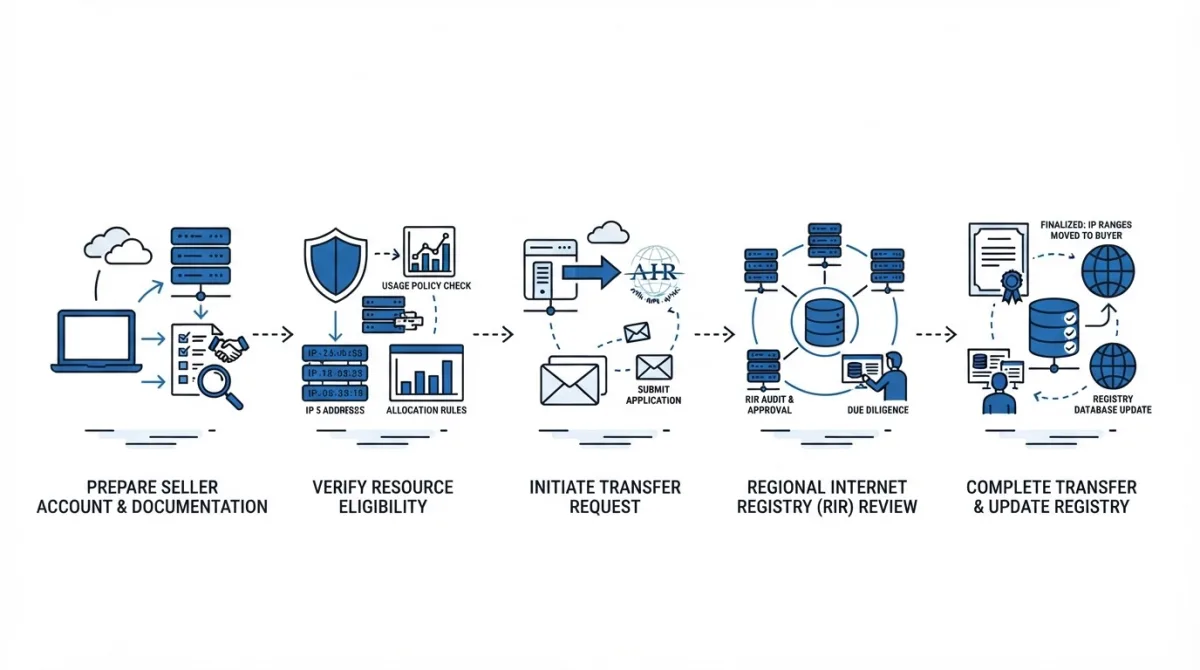
An IPv4 sale is completed only when the relevant Regional Internet Registry recognizes the transfer and updates the registration records. A commercial agreement alone is not enough. Sellers should identify the applicable RIR policy early because eligibility, documentation, waiting periods, and approval requirements differ by region.
IPv4 RIR transfer rules are registry policies that define whether an address block can move from its current holder to another organization and what both parties must provide. Seller requirements can include ownership verification, transfer eligibility, corporate documentation, minimum prefix rules, waiting periods, and coordination with RIPE NCC, ARIN, APNIC, or LACNIC.
Table of Contents
- Why should sellers check RIR policy before finding a buyer?
- What seller requirements are common across RIRs?
- What should sellers know about RIPE NCC transfers?
- What is different about ARIN seller eligibility?
- How does APNIC handle IPv4 transfers?
- What should sellers consider under LACNIC policy?
- Why are inter-RIR transfers more complex?
- How should documentation be prepared for RIR approval?
- What additional questions should IPv4 sellers ask?
- How should sellers approach RIR transfer compliance?
Why should sellers check RIR policy before finding a buyer?
The applicable policy affects whether the block is transferable, which buyers can receive it, and how the transaction must be structured. Inter-RIR transactions may also need to satisfy requirements on both sides.
A seller should establish:
- which RIR administers the block;
- whether the resource is eligible;
- whether a waiting period applies;
- whether the buyer’s RIR supports the transfer;
- which documents are required;
- who must initiate the request.
These checks reduce the risk of agreeing to a transaction that cannot be completed.
What seller requirements are common across RIRs?
A seller normally needs to demonstrate control of the IPv4 resource. Registry records should identify the correct holder, and unresolved disputes can prevent approval.
Company information and authorized contacts should also be current. If the registered organization changed through a merger, acquisition, restructuring, or name change, records may need correction before transfer.
What should sellers know about RIPE NCC transfers?
RIPE NCC permits eligible resource transfers within its service region and supports inter-RIR transfers with compatible registries. IPv4 resources are generally subject to a 24-month transfer restriction after the holder receives them, including certain changes in business structure.
RIPE NCC also requires appropriate transfer documentation and authorized signatures. For inter-RIR transfers, both registries must approve the transaction.
What is different about ARIN seller eligibility?
ARIN distinguishes transfers within its region under NRPM 8.3 from inter-RIR transfers under NRPM 8.4. The source must be the registered holder, resources must not be disputed, and the minimum IPv4 transfer size is /24.
ARIN also applies additional restrictions related to recently received resources and post-transfer access to the IPv4 Waitlist. Sellers should check these conditions before negotiation.
How does APNIC handle IPv4 transfers?
For APNIC transfers, the source must be the registered holder and the resource must not be disputed. The minimum transfer size is /24. The source initiates the transaction through MyAPNIC, after which the recipient acknowledges it and APNIC evaluates the request.
APNIC also supports inter-RIR transfers with compatible registries. Some resources have additional restrictions, including certain addresses from the 103/8 free pool.
What should sellers consider under LACNIC policy?
LACNIC permits qualifying IPv4 transfers and supports transfers with compatible RIR regions. For inter-RIR transfers into LACNIC, the minimum block size is /24, and the source must be recognized as the current rights holder without a dispute.
Its policy also includes post-transfer restrictions. Under the cited provision, an organization transferring a block becomes ineligible to receive IPv4 allocations or assignments from LACNIC for one year.
Why are inter-RIR transfers more complex?
An inter-RIR transaction connects two policy systems. The seller must satisfy the source registry’s requirements, while the recipient may need to meet separate eligibility or demonstrated-need rules.
Before selling an IPv4 block, the parties should confirm that both registries support the intended transfer type and understand who is responsible for each step.
How should documentation be prepared for RIR approval?
Documentation should be assembled before closing dates are fixed. Registry review may require proof of legal identity, registration details, signing authority, transfer agreements, and information linking the organization to the resource.
Technical records should also be reviewed because registry transfer and operational handover are separate. Sellers may still need to update or remove IRR objects, ROAs, reverse DNS, and routing announcements.
What additional questions should IPv4 sellers ask?
How should sellers approach RIR transfer compliance?
Sellers should verify eligibility, ownership records, documentation, waiting periods, and the buyer’s transfer path before committing to closing terms. Because RIPE, ARIN, APNIC, and LACNIC policies can change, current requirements should be checked for each transaction. Organizations that need support coordinating an IPv4 sale can contact InterLIR Global to structure the process from eligibility review through registry approval and handover.