When is the right time to sell an IPv4 block?
 Bram de Vries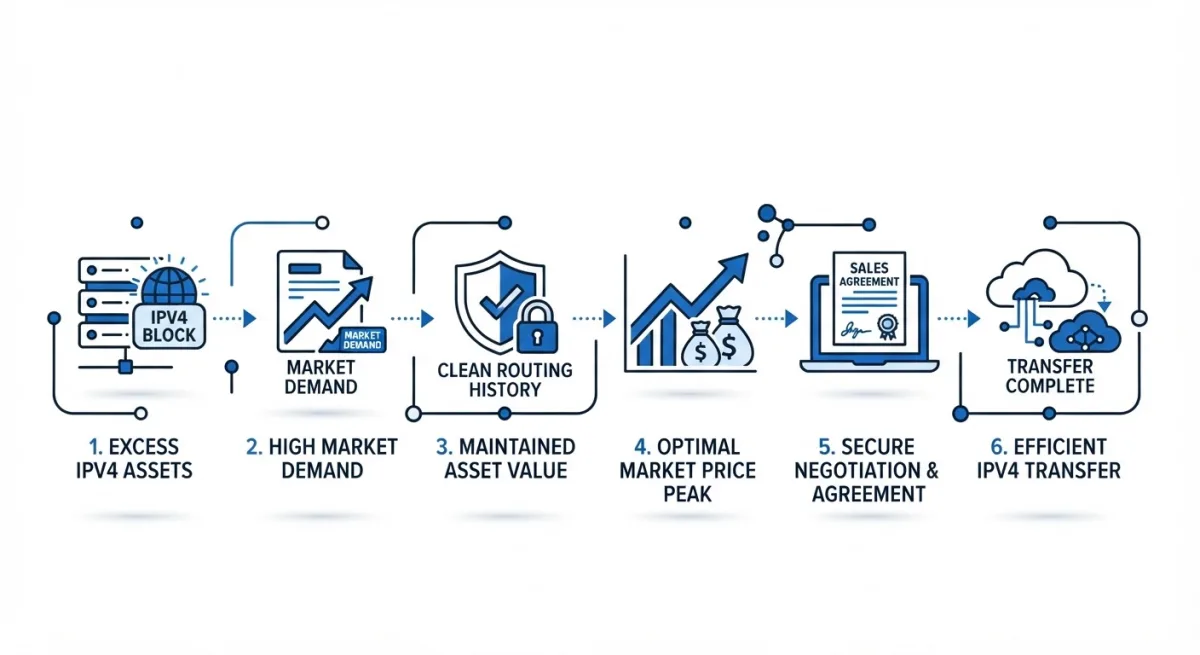
Selling an IPv4 block is a strategic asset decision, not only a response to current market pricing. An owner should understand whether the space is genuinely surplus, whether future infrastructure may need it, and whether the block is technically and administratively ready for transfer before choosing divestment.
IPv4 block sale timing is the process of deciding when an address asset should move from holding to sale. It combines capacity surplus, market conditions, demand, readiness, future infrastructure needs, and strategic decision factors so the owner can determine whether selling now creates more value than retaining the resource.
Table of Contents
- What decision factors should come before a sale?
- How does capacity surplus affect sale timing?
- How should market conditions influence the decision?
- What makes an IPv4 block ready for divestment?
- When is holding more strategic than selling?
- How should selling be compared with leasing?
- How should demand conditions affect timing?
- What additional questions should asset owners ask?
- How should an owner decide when to sell IPv4?
What decision factors should come before a sale?
The first question is whether the block is truly unnecessary for future operations. A range may appear idle today but still have value for customer growth, disaster recovery, regional expansion, or a planned infrastructure change.
The owner should review:
- current and forecast IPv4 utilization;
- future customer or service demand;
- internal reserve requirements;
- planned network expansion;
- cost of replacing the capacity later;
- alternative options such as leasing.
A sale becomes easier to justify when the block is outside realistic internal demand for the planning horizon.
How does capacity surplus affect sale timing?
Capacity surplus exists when the organization holds more usable IPv4 than its current and forecast network requirements justify. This may result from infrastructure consolidation, cloud migration, mergers, IPv6 adoption, or the retirement of older services.
Surplus should be verified through actual allocation data rather than a simple registry inventory. Addresses may still appear in firewalls, DNS, VPN configurations, customer allowlists, or recovery plans even when no active servers use them. The block should be considered saleable only after these dependencies are understood.
How should market conditions influence the decision?
Market conditions affect expected sale value and the time required to find a suitable buyer. Demand can vary by prefix size, RIR region, routing history, reputation, and transfer path, so owners should avoid basing decisions on a single historic price.
A strong market may support divestment when the asset is already surplus, but price alone should not force a sale. If future internal demand is likely, the cost of replacing the block later may exceed the benefit of selling during favorable conditions.
What makes an IPv4 block ready for divestment?
Readiness means the resource can enter due diligence and transfer without unresolved ownership or technical issues. The seller should know the exact prefix boundaries, registered holder, transfer eligibility, routing state, and reputation condition before approaching buyers.
A sale-ready block should have:
- clear ownership and signatory authority;
- accurate RIR and contact records;
- confirmed transfer eligibility;
- documented BGP and routing status;
- reviewed reputation and blacklist history;
- no unresolved internal dependencies.
Sell IPv4 addresses planning is more predictable when these checks are completed before commercial negotiations begin.
When is holding more strategic than selling?
Holding may be preferable when the address asset supports future flexibility. A company expecting new facilities, customer growth, acquisitions, or increased demand for dedicated public IPs may place more value on retaining the block than on receiving immediate capital.
The decision should also consider replacement difficulty. If future acquisition could take time, cost more, or require renumbering, holding can protect long-term infrastructure plans even when current utilization is low.
How should selling be compared with leasing?
Selling creates a permanent divestment and a one-time capital event. Leasing keeps ownership and can produce recurring income, but it adds tenant management, contract risk, and reputation exposure.
The better option depends on the owner’s strategy. A block with little expected internal use may be suitable for sale, while an asset that could be needed later may fit leasing better if contract duration and return conditions preserve enough flexibility.
How should demand conditions affect timing?
Buyer demand should be evaluated by qualified interest rather than inquiry volume alone. A large number of low-quality offers does not necessarily mean market conditions support a strong transaction.
Owners should consider the type of buyers seeking the prefix, expected transaction timing, comparable block sizes, and whether demand is concentrated in a particular RIR region. This helps distinguish temporary market activity from conditions that support a realistic sale.
What additional questions should asset owners ask?
How should an owner decide when to sell IPv4?
The right sale timing should connect capacity surplus, market demand, readiness, holding value, and the strategic role of the asset. If an organization wants to evaluate whether an IPv4 block is ready for divestment and prepare a controlled transfer path, it can contact InterLIR Global to assess the resource against current market and infrastructure priorities.